About
Me
Neuroimaging scientist with 15+ years turning complex MRI and longitudinal cohort data into reproducible pipelines, published findings, and open-source tools.
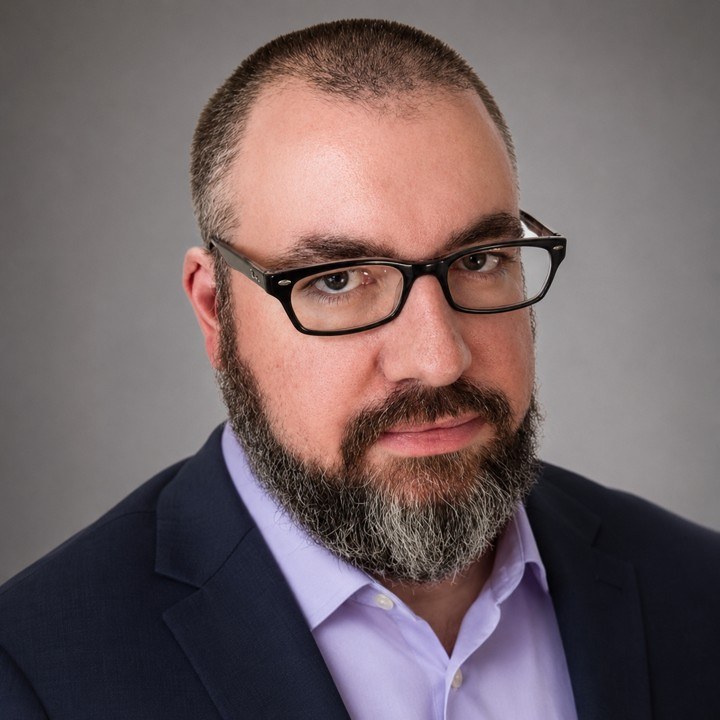
Background
I'm a neuroimaging scientist with over 15 years of experience developing multimodal MRI analysis pipelines in academic research settings. My career has been built around a consistent problem: how to get from raw scanner data to reliable, interpretable scientific findings; and how to make that process reproducible, well-documented, and accessible to research teams that need imaging expertise but don't always have it in-house.
I earned my Ph.D. in Neuroscience from the University of Cincinnati College of Medicine, where my dissertation used multimodal MRI to investigate the long-term brain consequences of childhood lead exposure. That work established the methodological foundation I've built on ever since: structural volumetrics, diffusion imaging, spectroscopy, and the pipeline engineering needed to apply these methods consistently across large cohorts.
Before graduate school, I studied psychology and neuroscience alongside creative writing at Bowling Green State University, where I worked in an affective neuroscience lab studying emotional processing and social behavior in rodent models. That combination, quantitative methods and clear communication, has shaped how I approach both analysis and scientific writing throughout my career.
Research
My research has centered on understanding how environmental exposures and neurotrauma affect brain structure, connectivity, and behavior, with a methodological core in developing the imaging pipelines that make those investigations possible.
Environmental Health & the Brain
As the principal neuroimaging analyst for three concurrent NIH-funded longitudinal cohorts at the University of Cincinnati, I developed and implemented multimodal analysis pipelines for studying the effects of childhood lead exposure and traffic-related air pollution on brain development. This work produced six peer-reviewed publications, including a first-author study demonstrating reduced cortical thickness associated with early-life air pollution exposure — findings that received international media coverage from Reuters, the Daily Mail, and numerous scientific outlets.
Neurotrauma
At Indiana University, I developed task-based fMRI analysis pipelines to investigate cognitive outcomes following repetitive subconcussive head impacts in athletes. This work examined how ADHD diagnosis moderates working memory performance in the context of sports-related brain injury, contributing to the growing understanding of individual vulnerability factors in neurotrauma research.
Clinical Neuroscience
Across my postdoctoral training, I provided neuroimaging analysis expertise for studies spanning binge eating disorder, childhood-onset systemic lupus erythematosus, pediatric brain tumors, and stress neurobiology — developing and adapting analysis approaches to meet the specific methodological requirements of each clinical question.
Tools & Methods
Alongside my research, I've increasingly focused on building tools that address practical problems in the neuroimaging workflow — from assessing whether your hardware can handle the processing, to converting raw data into community-standard formats, to running advanced diffusion analysis with modern methods. Each tool is designed for real research environments, with features like checkpoint-based resumption, parallel processing, dry-run modes, and comprehensive quality control reporting.
SMILD
Python · Novel methodology
My most theoretically original contribution — a voxelwise reliability framework (Standard Model Inter-branch Likelihood Distance) addressing an unsolved identifiability problem in diffusion MRI's Standard Model, where distinct biophysical solutions can fit the same signal equally well. I derived the estimation theory against the primary literature and validated the proof-of-concept against three falsifiable predictions on synthetic ground-truth data. The production estimator and validation against the ABCD Study cohort are in active development.
dwiforge
Bash / Python · v2
My most substantial tool — an end-to-end diffusion MRI processing and structural connectivity pipeline that integrates ML-enhanced registration (SynthMorph, VoxelMorph, ANTs with automatic method selection and GPU acceleration), SS3T-CSD tractography with SIFT2 biological filtering, atlas-based structural connectome construction, and NODDI microstructure modeling. Built for BIDS-formatted datasets with checkpoint-based resumption and comprehensive automated QC reporting.
QSI-extract
Python · Tested & CI-validated
Collates diffusion MRI scalars (NODDI, DTI, tractometry) from QSIPrep/QSIRecon derivative trees into tidy, longitudinal tables. BIDS-aware, with NODDI model-fitting assumption auditing and QC-flag propagation across pipeline versions — hardened with a full pytest suite and continuous integration across four Python versions.
fsglean
Python
BIDS-aware extraction of FreeSurfer stats files into tidy, longitudinal tables, built for the same cohort-scale, multi-timepoint data structures used across NIH-funded longitudinal studies.
bids-convert
Bash / Python
A configurable DICOM-to-BIDS conversion tool supporting multi-modal neuroimaging data across anatomical, functional, diffusion, fieldmap, perfusion, and PET modalities. Features user-editable pattern-matching configuration, parallel conversion, source data archival with safe deletion, JSON sidecar metadata enrichment, and full BIDS scaffold generation — designed to bridge the gap between scanner output and pipeline-ready datasets.
NeuroRig
Python · WSL2 optimized
A lightweight diagnostic utility that helps neuroimaging researchers assess whether their hardware can handle intensive MRI processing pipelines. Benchmarks RAM, disk I/O, and GPU/CUDA availability against neuroimaging workload requirements, with WSL2-specific resource verification and interpretive output mapping results to specific processing capabilities.
All tools are published with comprehensive documentation on GitHub. I'm currently preparing a methods paper describing dwiforge for peer-reviewed publication.
Current Work
My work currently spans three areas:
AI Model Development
As a subject matter expert at Outlier AI, I contribute neuroscience and biomedical sciences expertise to AI model training through content creation, quality evaluation, and multimodal training initiatives. I author expert-level scientific prompts and custom evaluation rubrics, and have achieved "Oracle" contributor status recognizing sustained high-quality performance across 20+ codenamed research projects, including multi-phase evaluation workstreams (factuality arbitration, side-by-side quality evaluation) and major individual engagements.
Neurotechnology
I serve as Neurotechnology Adviser to MetaBrain Labs, an early-stage startup developing an AI-powered cognitive performance platform. I provide research methodology and neuroscience consultation, including leading the research design for their pilot study protocol — study design, outcome measure selection, and human subjects research considerations.
Open-Source Tool Development
I continue developing and refining my neuroimaging software tools, with a particular focus on integrating machine learning methods into reproducible processing workflows. I'm interested in how pre-trained deep learning models can improve registration, segmentation, and quality control in imaging pipelines — and in making these approaches accessible through well-documented, well-engineered software.
I'm most interested in roles where methodological rigor drives real decisions — neuroimaging and biomarker science in clinical research, translational imaging, and industry settings where getting the science right matters as much as getting it done.
In the Media
My 2020 first-author publication on reduced cortical thickness associated with traffic-related air pollution received international media coverage, highlighting the public health implications of early-life environmental exposures on brain development. My 2021 first-author publication on criminal arrests and childhood lead exposure has since been cited in federal litigation — including an Amici Curiae brief filed with the U.S. Court of Appeals for the D.C. Circuit in 2026 — and in legal scholarship.
Additional coverage appeared in PsychCentral, Deccan Herald, The London Economic, Air Quality News, Medindia, Green Car Congress, and other outlets.
Connect
I'm always interested in connecting with researchers, engineers, and organizations working at the intersection of neuroimaging, computational methods, and brain health. Whether it's a potential collaboration, a question about my tools, or a conversation about where the field is heading — feel free to reach out.